CASE STUDY

WooliesGO

The 

context

WooliesGO is an internal Woolworth’s delivery app used by fleet drivers to complete customer deliveries. WooliesGO was built naively across Android and iOS. With the introduction of a flutter app, they could re-build the apps on one single code base, potentially increasing development speed by 40%. 


I was task with redesigning the current app to be adaptable across Android and iOS. From a user experience perspective, this would give us the opportunity to review the current pain points and potential opportunities. 

From a business a key goal is efficiency, any where possible decrease time taken to complete task was an added benefit to the project.

Timeline

1 year

Role

User interface &
User experience

Tools

Figma & Miro


Design process

I followed a lean UX design thinking process to ensure my decision were supported through user research and feedback.
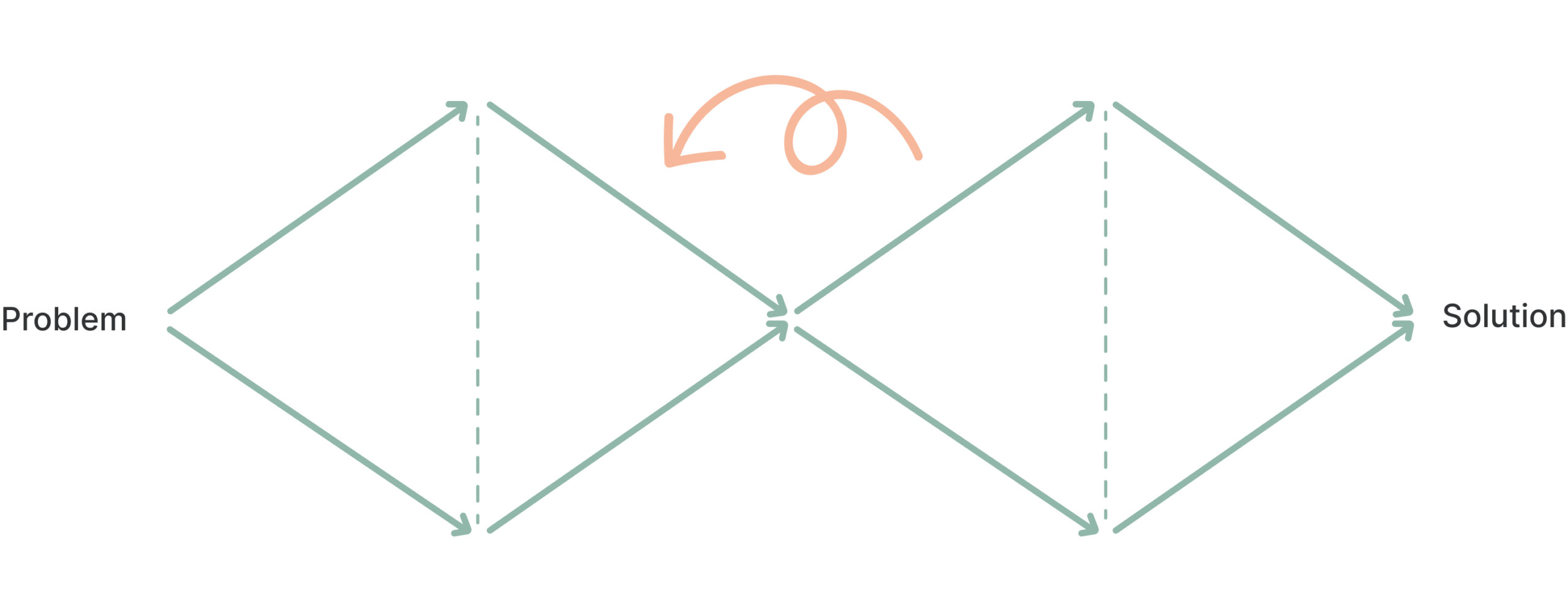
Discovery

Mapping features
User flows
Competitor analysis
Baseline usability test
Voice of Driver feedback

Define

Goal and Task Modal
Wire frames

Test & learn

Design system 
Goal and Task Modal
Wireframes

Delivery

Development ready design

DISCOVERY
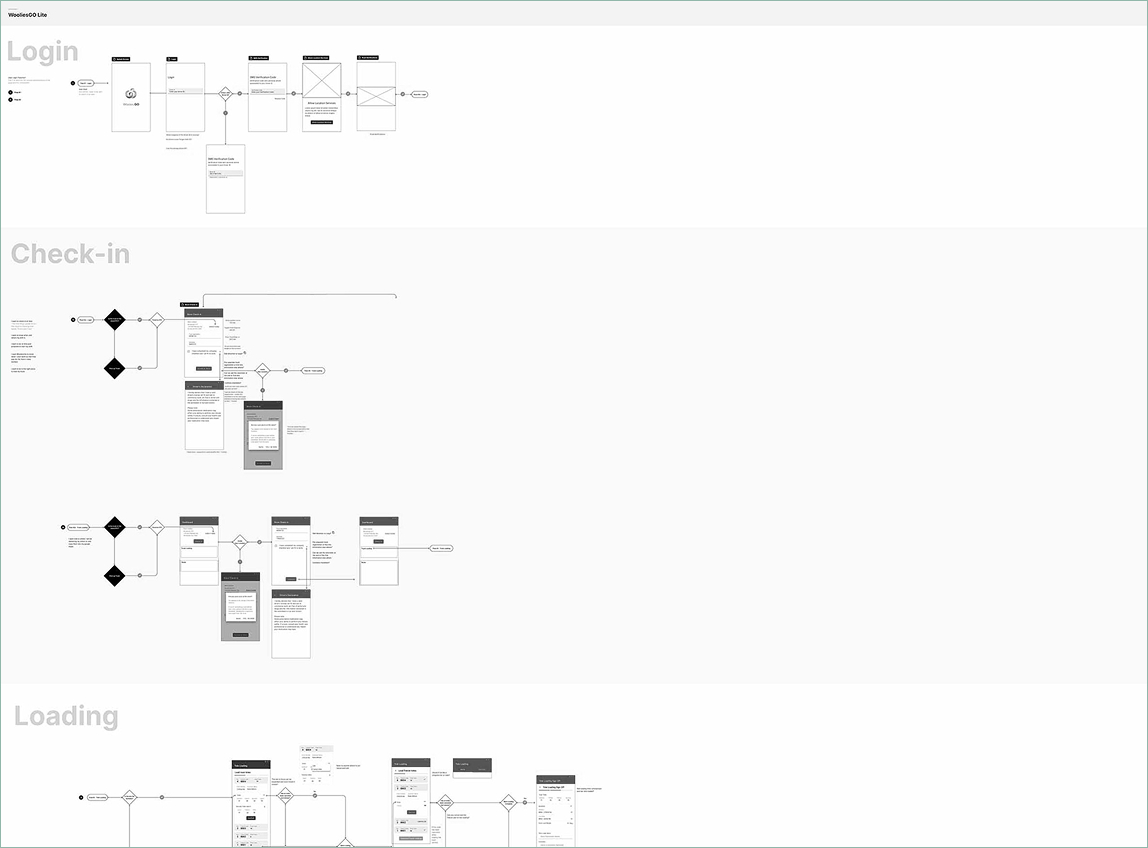
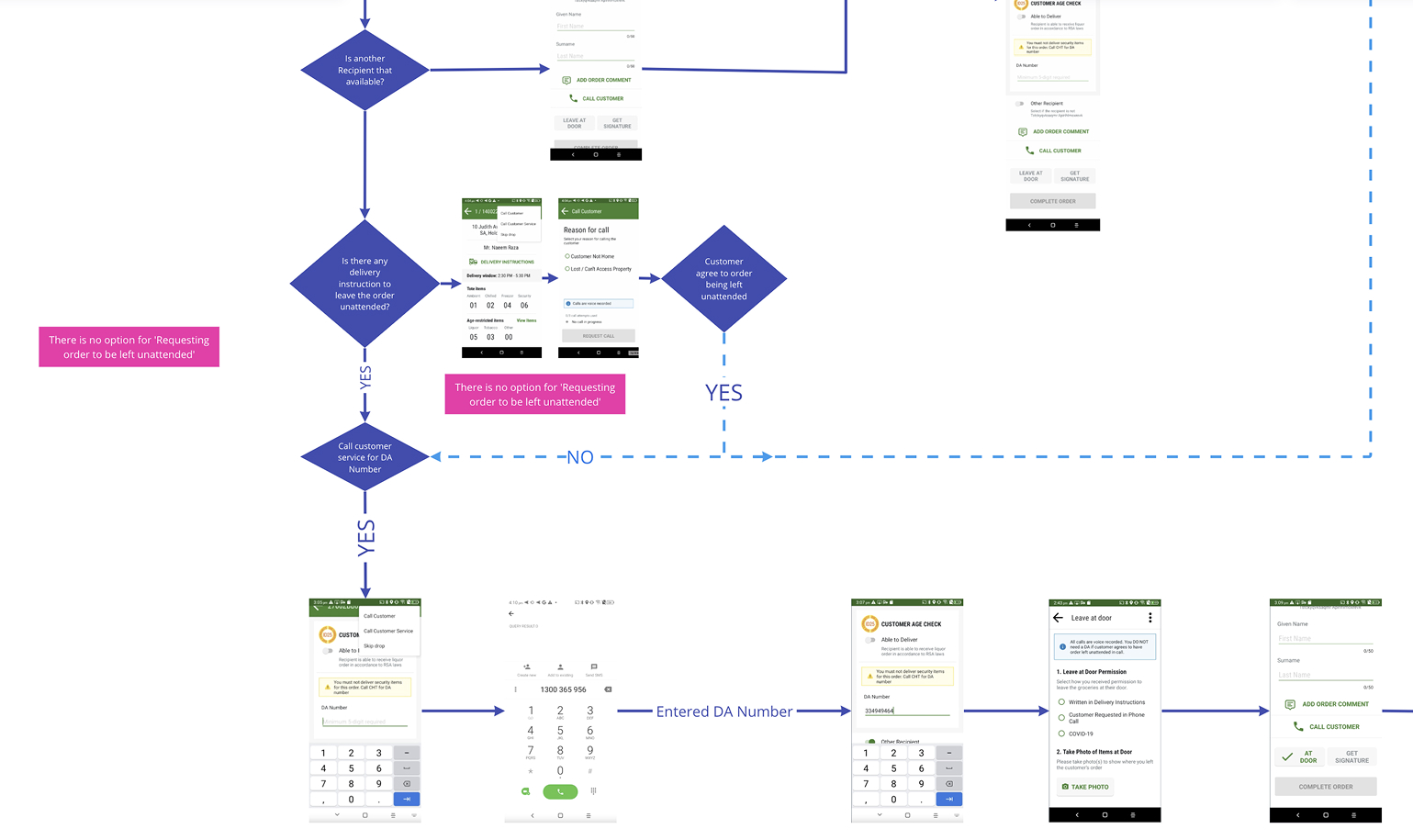
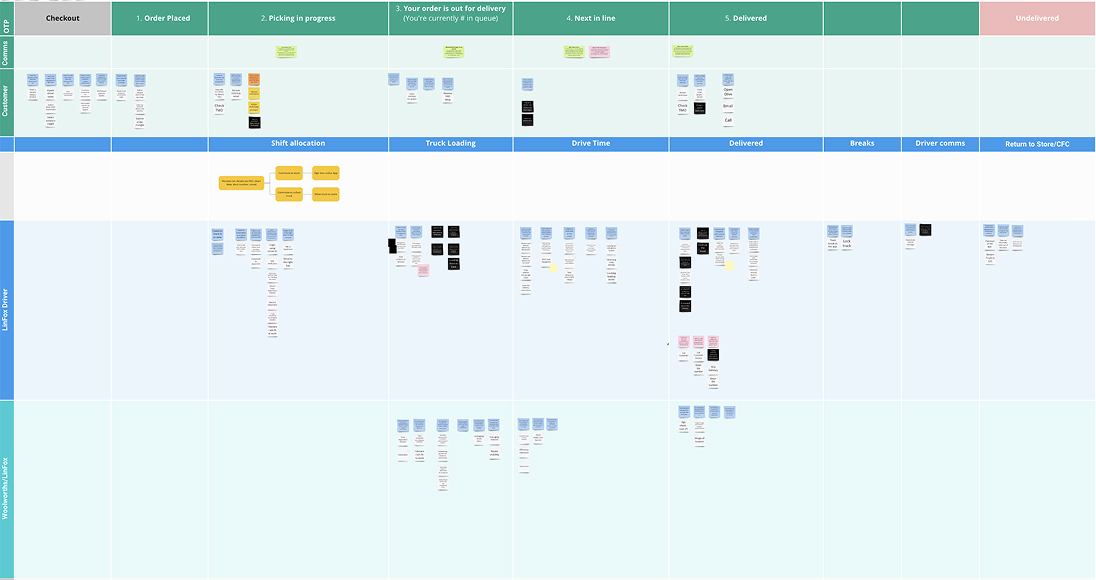
Mapped the current experience

I conducted an in-depth analysis of the live driver application to fully grasp its existing user journey. To achieve this, I created a comprehensive process map that charted every screen, user action, and decision point. 

This visual overview allowed me to see how drivers moved through key workflows, uncovering both the app’s core functionalities and any hidden bottlenecks.
Compare to the market

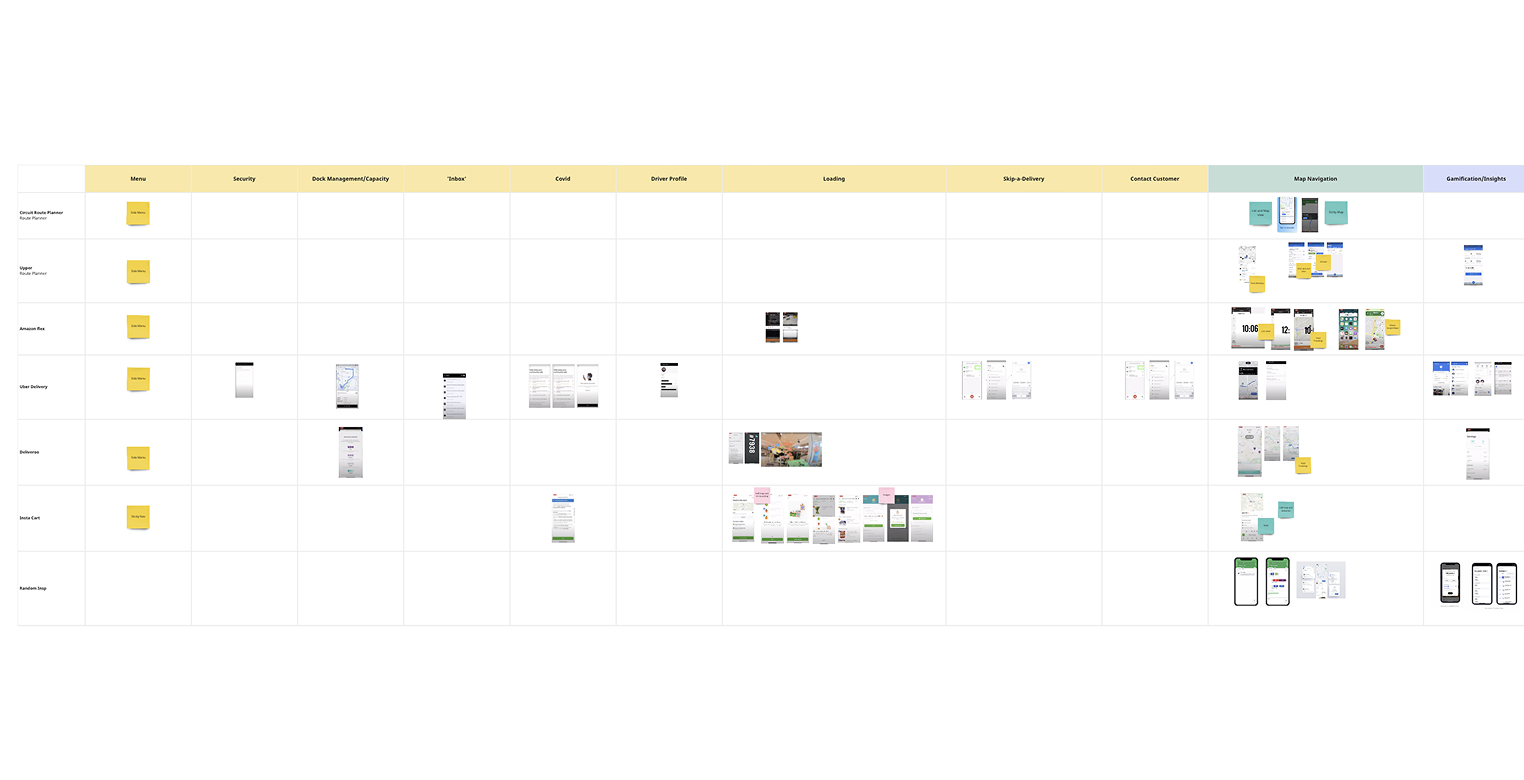
To understand how our driver app measures up against industry standards I completed feature bench marking essential features such as route optimization, real-time notifications, and dashboards across multiple apps. 

This surfaced valuable recommendations for navigation and information architecture. By observing how top competitors guide users through complex tasks with minimal friction, I identified best practices adopted such as streamlined menu hierarchies, contextual prompts, and progressive disclosure of information.
Identifying friction and delight

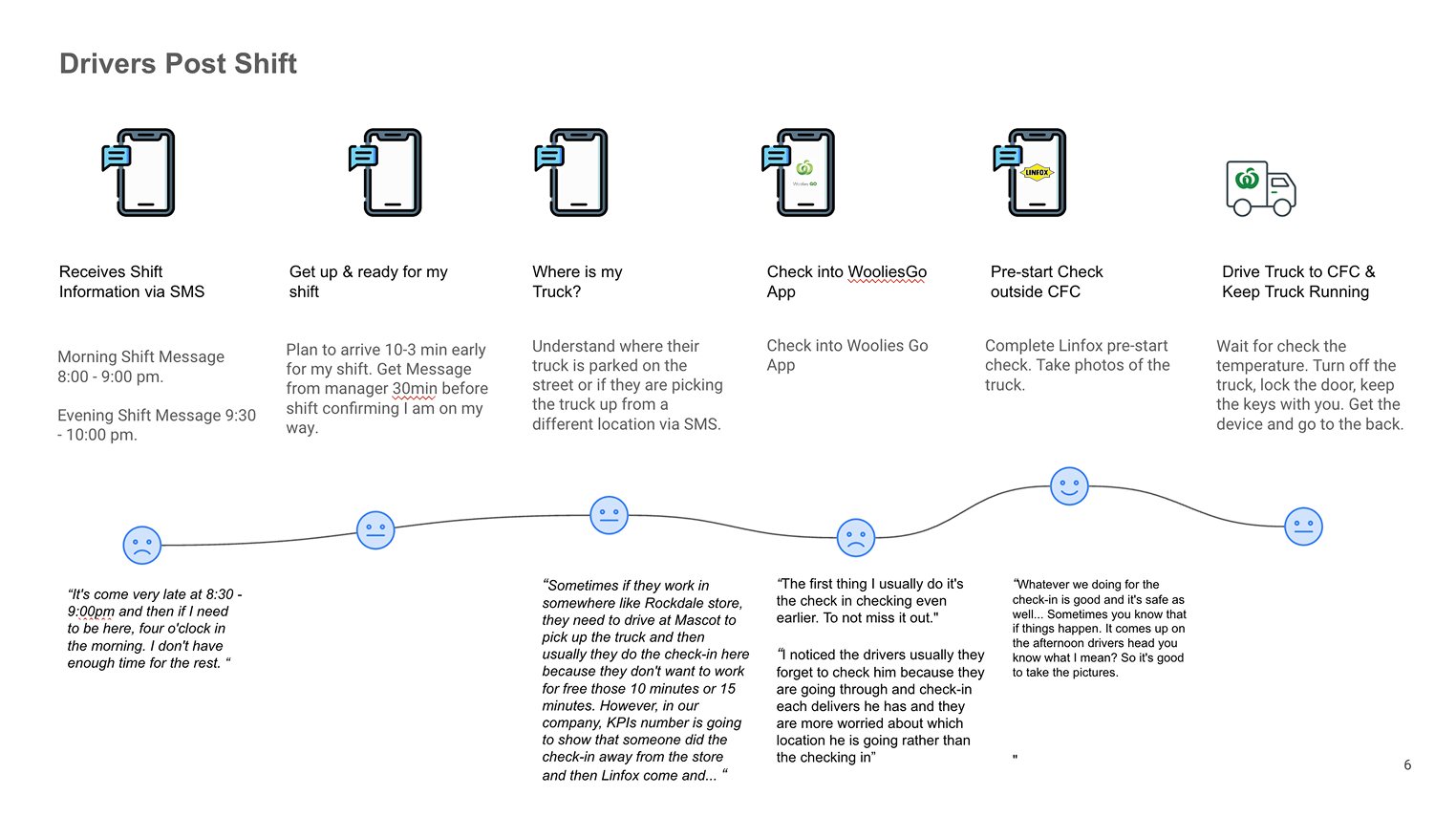
To pinpoint exactly what worked and what didn’t within the app, I combined baseline usability testing and driver survey feedback. This exercise exposed specific pain points, confusing screens, and areas of key information.

Together, these activities provided a clear roadmap of enhancements needed to elevate driver satisfaction and efficiency.
Key Insights

From a business and user perspective, a reduction in the app’s complexity was highly desirable. Tasks that were previously valuable from an operational perspective but as technology and business evolved have now become redundant.

From a user perspective, the fewer tasks they have to complete the less cognitive load and users can be more efficient when completing daily tasks. This also aligns with the business goals of reducing the cost to build as well as operational efficiency with a simple solution.


Key goals:


  • Provide contextual information
  • Provide users with relevant information at each stage of their journey. To reduce the number of unnecessary clicks to complete a delivery
  • Provide a transparent process to guide drivers with the right process within WooliesGO rather than relying on internal onboarding.
DEFINE
Goal and task modal

During this phase, we developed a Goal and Task Model to understand the objectives of our key stakeholders: customers, drivers, driver supervisors, and the Woolworths Logistics team. By mapping each stakeholder’s primary goals, we gained clarity on what each group needed from the WooliesGO app.

For customers, the focus was on order transparency and a reliable delivery experience. Drivers required efficient workflows and clear guidance. Supervisors needed visibility into performance and compliance, while Woolworths prioritized operational consistency and customer satisfaction. This model enabled us to identify gaps, eliminate unnecessary tasks, and ensure the app delivers meaningful value across the entire ecosystem.

Validating technical feasibility

I developed low-fidelity wireframe concepts and presented the potential solution to my team, enabling early alignment and constructive feedback. This collaborative playback session helped surface valuable insights into technical feasibility and operational requirements.

Design system

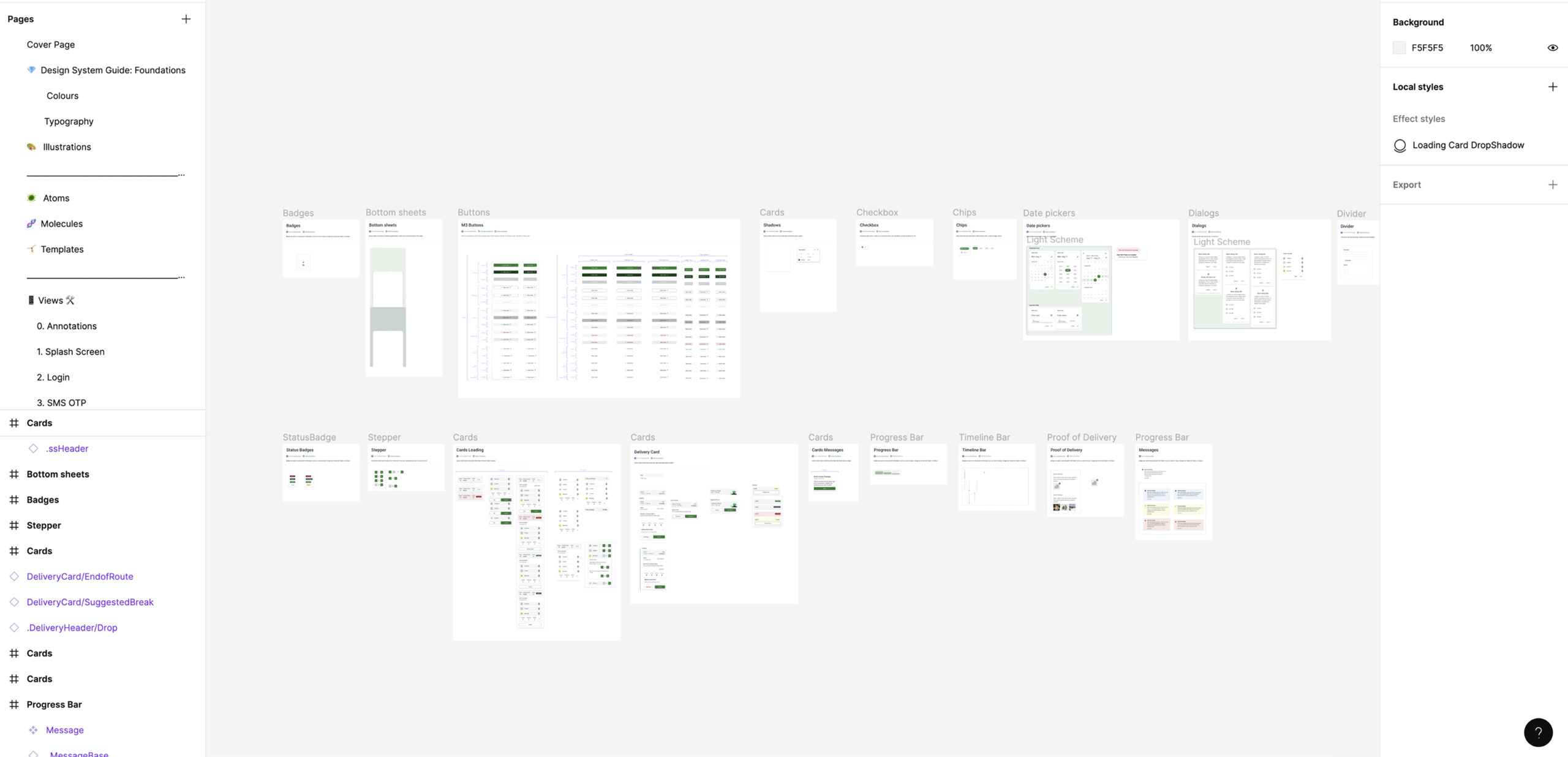
I aligned with Woolworth’s core design system for design tokens for colours, fonts and unique components but followed a Material 3 Design System. 

The project required me to build a new unique design system because WooliesGO required a design system that would be usable across both iOS and Android.
User research approach

We structured the app around two core user journeys: (1) logging in through to loading the delivery truck, and (2) navigating the dashboard, completing deliveries, and returning to base. 

Each section was prototyped and tested with delivery drivers, with iterative refinements based on feedback. By the end of the project, we had engaged over 70 drivers across five fulfillment centers in Australia, ensuring the final experience was shaped by real-world insights and practical needs.

DELIVERY

The process below was completed throughout WooliesGO. I have chosen to focus on the delivery journey because it was a key journey within this app.


Key high-level changes:


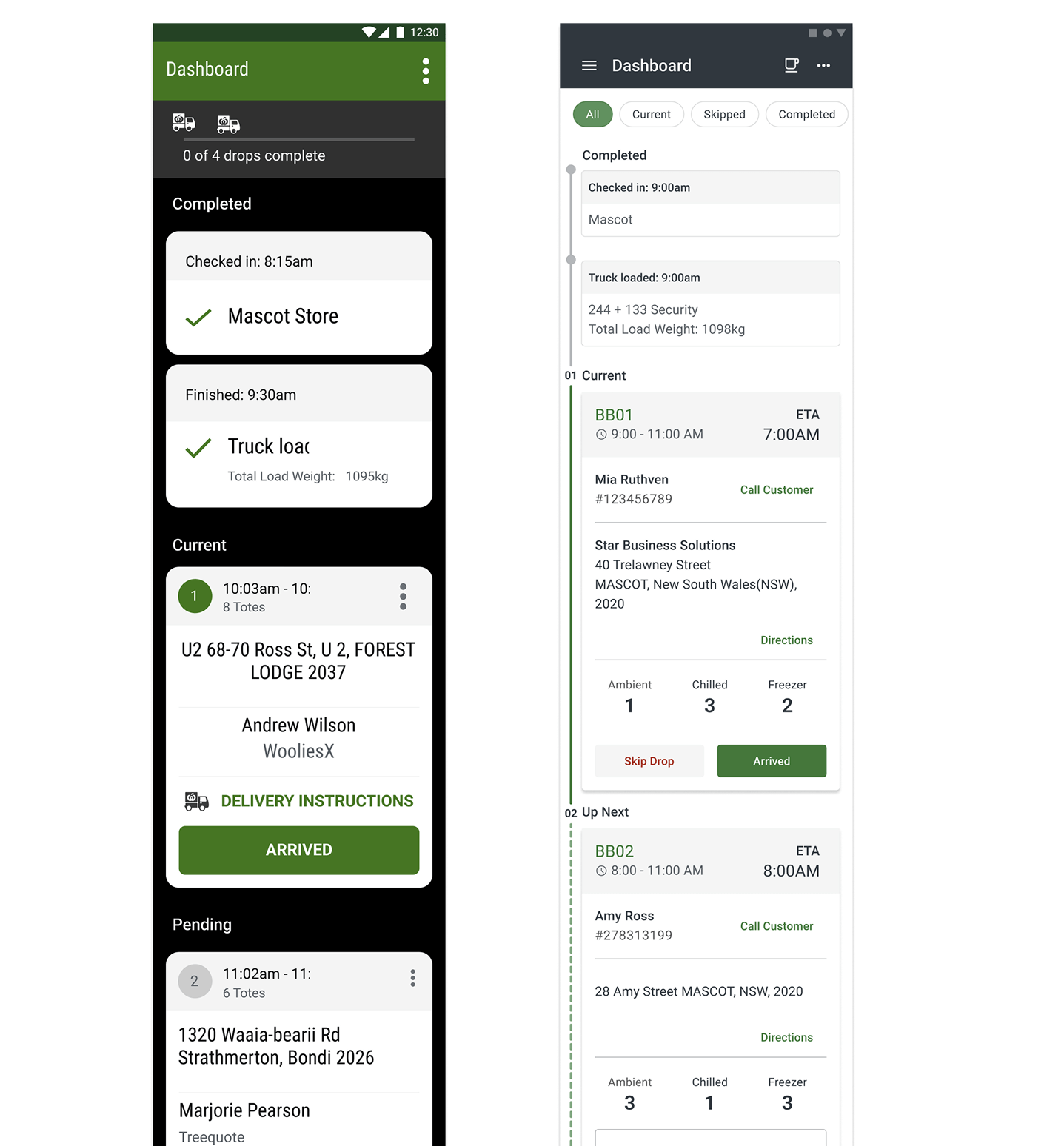
  • Showing key information to the drivers, such as their delivery window, and delivery items.
  • Having key actions accessible such as ‘Skip Drop’ and ‘Call Customer’
  • Delivery instruction shown within an accordion removing unnecessary clicks into a new page but collapsible if preferred.
  • Giving suggested break times within the context of their scheduled route.
  • Creating a filter for users to quickly find the relevant customer delivery.
  • Restructuring the dashboard to show the number of the drop and the Transit Code(Delivery ID code). This information is key to users. Sometimes these codes do not match so increase proximity means users can identify when delivery is out of sequence. Within testing, this was found to be successful.


Highlights of user testing results:


  • Users were able to understand the information shown.
  • Users request more detailed order information for context.
  • The users reacted positively to key information being accessible within the dashboard.

Key High-Level Changes:


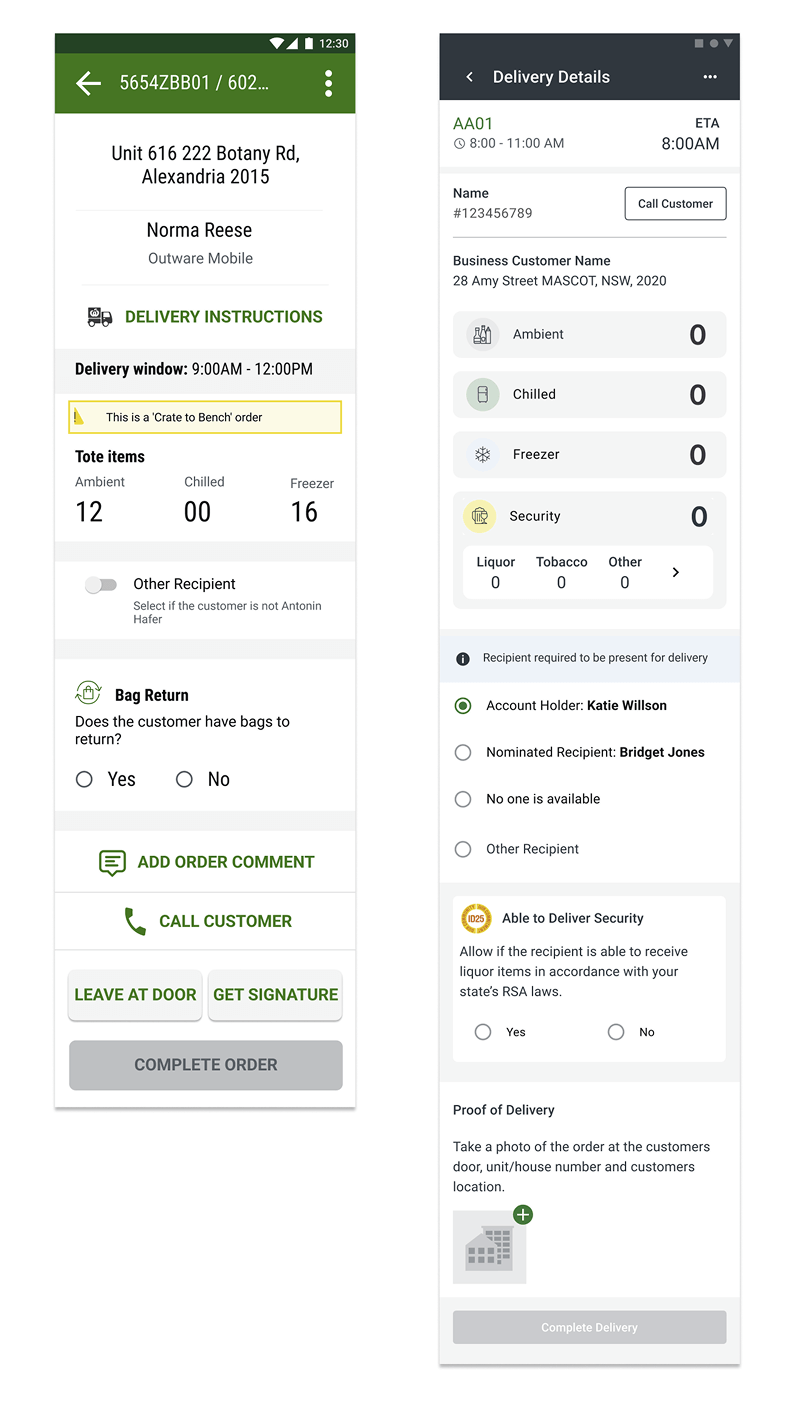
  • Removing unnecessary features such as ‘Get Signature’ as they no longer were a business requirement.
  • Surfacing key interactions within one click. (E.g ‘Call Customer’ & ‘Adding photo’)
  • Dynamically showing the number of ‘Security’ crates to highlight to the users that this delivery includes an additional delivery type. As well as pairing the colour of the sticker of the security crate. Drivers are trained to take note of security totes, so this behavior can be translated within the app.


Iteration based on user testing: 

The original concept delivery requirements, for example, if the order is able to be left unattended with a pills design but this was missed by users within testing and the design was revisited and retested in a message format(pictured on the right). We also learned the area of focus for the user was toward the bottom of the screen. After re-testing, the visibility and comprehension increased significantly.

Review Delivery requirements

Guiding Woolworths Delivery drivers through the process. Previously Driver would contact customer service for instruction when a delivery didn’t go to plan. Reducing this will impact drivers’ idle time and business costs associated with calling customer service.
By understanding the user journey and re-aligning across business teams of the required tasks, we were able to redesign the delivery requirements to empower drivers to make decisions when deliveries didn’t go to plan.

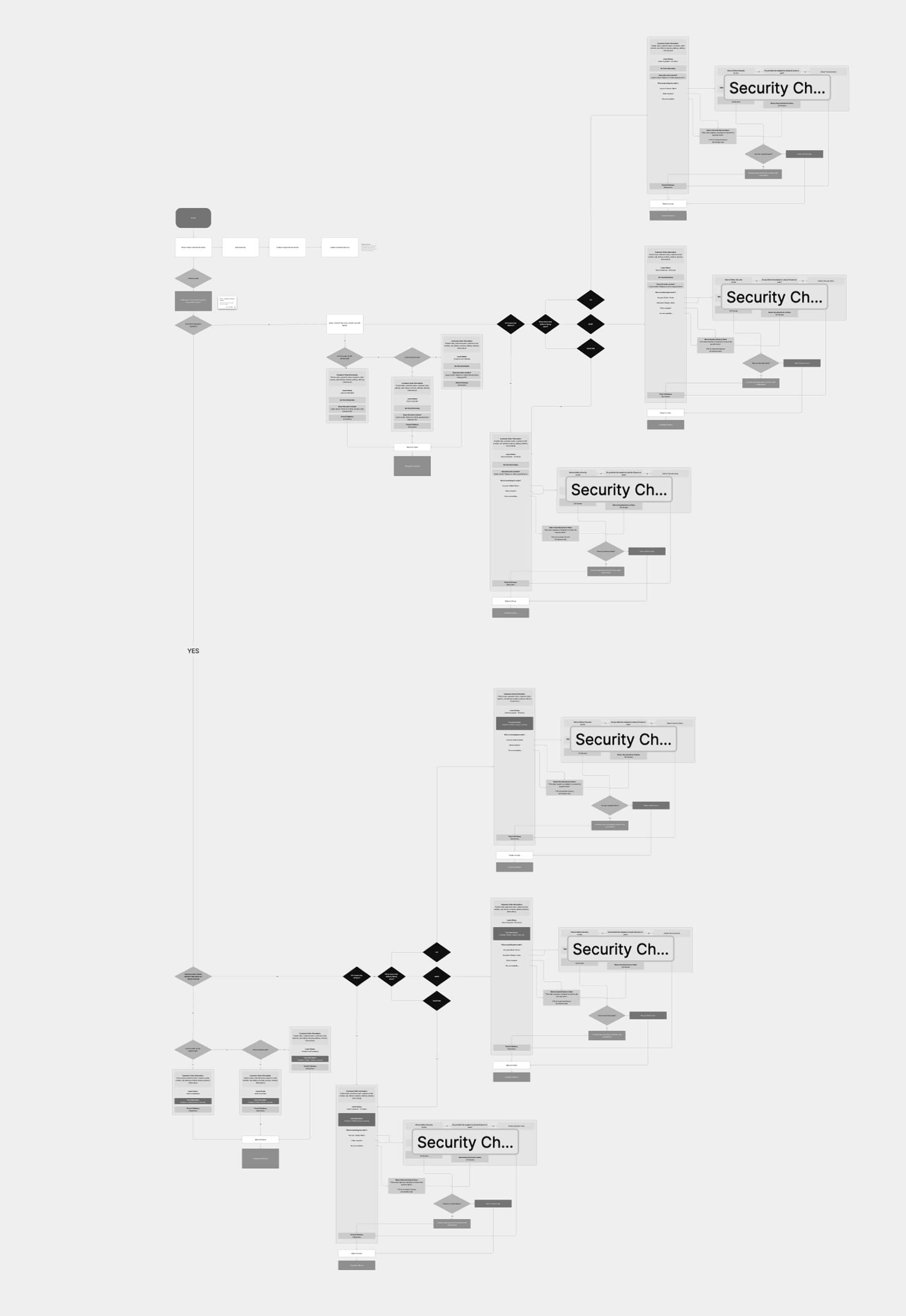
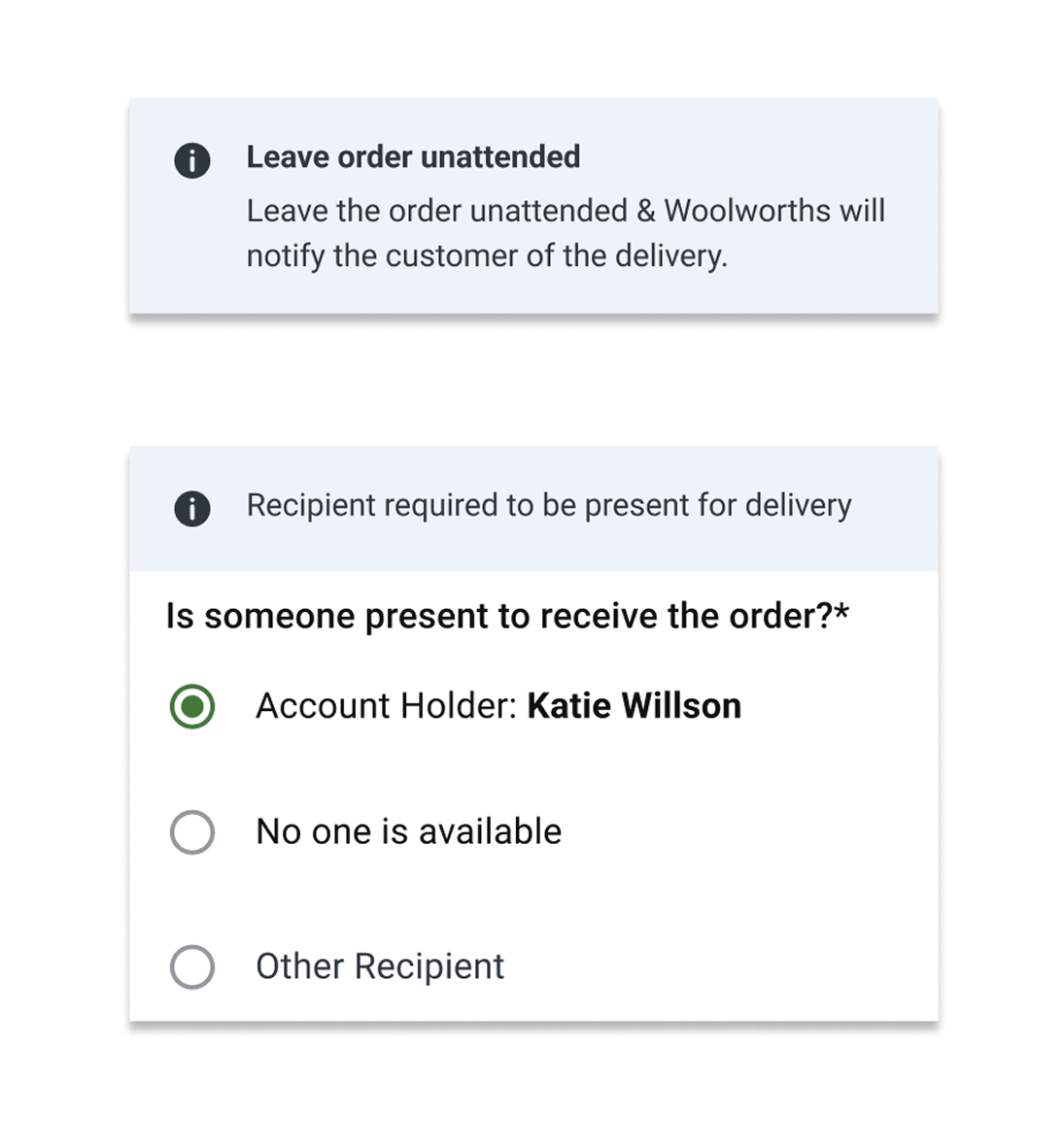
Highlighting to users the different delivery states:

  • Leave unattended
  • ‘The recipient is required to be present for delivery.’ Within the components based on the driver’s responses, we were able to guide them through the correct process. (the user flow the left represents the different flows across all states within Australia)
Key outcome

I delivered the solution design for the new delivery driver app for Woolworth’s and stayed aligned with the key goals based on my initial discovery; keeping it simple, contextual information and transparent process. This approach also aligned with key business initiatives of reducing the cost of delivery through route time reduction.

Route time will be reduced through:

  • Our review of user goals and tasks from both a Woolworth’s Delivery Driver perspective and removing unnecessary steps/screens. The predicted savings was significant and was put forward as a key benefit of the business case. 
  • Reviewing delivery requirements and guiding drivers when a delivery doesn’t go to plan with reduce the time normally spent contacting customer service for this information.


I also was able to create a design system that was aligned with the Woolworth’s group design system in key design tokens but was fit for the purpose of a driving app. A system that is scalable for future initiatives for WooliesGO and other platforms within the fulfillment space across the Woolworth’s group.

Prototype walkthrough WooliesGO
View Prototype
Privacy Settings
We use cookies to enhance your experience while using our website. If you are using our Services via a browser you can restrict, block or remove cookies through your web browser settings. We also use content and scripts from third parties that may use tracking technologies. You can selectively provide your consent below to allow such third party embeds. For complete information about the cookies we use, data we collect and how we process them, please check our Privacy Policy
Youtube
Consent to display content from - Youtube
Vimeo
Consent to display content from - Vimeo
Google Maps
Consent to display content from - Google